

Quick Summary
Google AI Overviews now appear in nearly 48% of all search queries as of early 2026 — a 58% jump in just three months. They are reducing organic click-through rates by up to 46.7% on informational queries. But websites that get cited inside these AI-generated summaries are seeing 35% more clicks than those that don’t appear at all. This blog explains what AI Overviews are, how they are changing the SEO game, and what you need to do right now to win visibility in this new era of search.
In this blog, we’ll cover:
Introduction
SEO in 2026 looks nothing like it did a few years ago. For a long time, the formula was simple – target the right keywords, build backlinks, fix technical issues, and hope your website ranks to page one. That still matters. But something has changed now.
Google now shows AI-generated answer summaries at the very top of search results. Before a user even sees a single website link, they often get a full answer written by Google’s AI – pulled from multiple sources and presented right there on the results page.This is not a small update. It is a fundamental shift in how Google search works. For businesses, marketers, and website owners, ignoring this change is not an option anymore.
What Are Google AI Overviews?
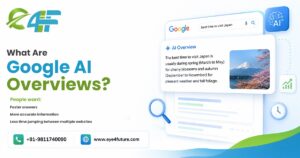
If you have used Google recently, you have probably noticed something new at the very top of search results – a box with an AI-generated summary that directly answers your question, before you even see the first organic result. That is a Google AI Overview.
Google AI Overviews (formerly called SGE – Search Generative Experience) are powered by Google’s Gemini AI. They pull information from multiple trusted websites, write it into a clear, readable answer, and present it right at the top of the search results page.
Google officially launched AI Overviews in the US in May 2024. Since then, they have expanded rapidly across countries, languages, and query types. By early 2026, they have become a permanent, central feature of Google Search – and they are fundamentally changing how SEO works.
The result is that users get a summarised answer without needing to visit any website at all.
If someone searches:
- “Best SEO strategies in 2026”
- “How AI affects Google rankings”
- “What is technical SEO”
There is a good chance Google generates a full answer right on the page — before the user scrolls down to see any website.
Think of it this way: before AI Overviews, the goal was to rank on page one. Today, the new goal is to be cited inside the AI-generated answer itself. That is a completely different game.
Why Google Introduced AI Overviews
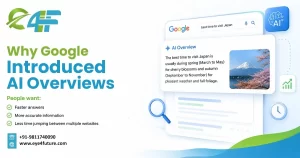
Google’s core goal has never changed — make search as useful as possible for the person using it.
People want:
- Faster answers
- More accurate information
- Less time jumping between multiple websites
AI Overviews help Google deliver:
- Instant summaries for common queries
- Better handling of conversational searches
- More accurate understanding of what the user actually wants
- More personalised and relevant results
This is part of a broader, long-term direction Google has committed to — building a search experience that is genuinely AI-first.
How Big Is the Impact? (2026 Data)

Let’s talk numbers, because the data here is genuinely eye-opening.
- 48% of all Google searches now trigger an AI Overview as of March 2026, up from 34.5% in December 2025 — that is a 58% increase in just three months.
- Around 50% of search queries in the United States now generate AI Overview responses.
- 58% of surveyed users reported performing at least one Google search in the past month that generated an AI Overview.
- The Pew Research Center found a 46.7% relative decline in click rates on queries with AI Overviews (8% with AIO vs. 15% without), across 68,000 real queries.
- Ahrefs measured a 34.5% CTR drop for position-1 rankings across 300,000 keywords.
- However, websites cited inside AI Overviews earn 35% more clicks than those that rank organically but are not cited.
- Mobile users are 40% more likely to engage with AI Overviews compared to desktop users.
- Brands that appear inside AI Overviews also see 91% more paid clicks than brands that don’t.
The takeaway is clear: ranking alone is no longer enough. You need to be cited. Visibility without citation is slowly becoming a losing strategy.
How AI Overviews Are Transforming SEO
Search Intent Matters More Than Keywords
For years, SEO revolved around getting the right keywords onto the page as many times as possible. Google’s AI has made that approach largely irrelevant.
The system now understands:
- The actual meaning behind a query
- The context around it
- What the user is really trying to accomplish
- Natural, conversational language
Content needs to answer real questions clearly — not stuff phrases onto a page.
Old approach: “Best SEO company in India providing SEO services for businesses.”
Modern approach: “Businesses looking to grow online need SEO strategies that focus on user intent, technical health, and content that genuinely helps their audience.”
Google rewards natural, well-explained writing now. It always should have.
Helpful Content Is Winning
Google’s Helpful Content System has continued to strengthen throughout 2025 and 2026.
AI Overviews pull from content that:
- Solves actual problems
- Gives practical, usable answers
- Uses real examples
- Explains things in plain language
- Reflects genuine expertise
Thin, recycled content is not just underperforming — it is being ignored entirely in many cases.
Businesses that want visibility need to produce:
- Original thinking and insights Practical ways to strengthen E-E-A-T:ulan>
- Content built on real experience
- Research-backed information
- Explanations that make things genuinely easier to understand
Topical Authority Is More Important
Publishing occasional blogs about random topics does not build the kind of presence that performs in AI search.
Google now pays close attention to whether a website consistently covers a particular subject in depth. If your site regularly publishes:
- SEO guides and tips
- Digital marketing updates
- Content strategy advice
- Google ranking analysis
Google begins to recognise your site as a trusted resource in that space. That recognition increases how often your content gets pulled into AI Overviews.
The goal is not to rank for one keyword. It is to become the most reliable source on a subject within your category.
AI Overviews Reduce Clicks — But Improve Traffic Quality
One thing many businesses are noticing is a drop in overall organic clicks. The reason is straightforward — a lot of users get what they need from the AI summary and do not click through anywhere.
But there is another side to this.
The traffic that does come through tends to be:
- More targeted
- More engaged
- More likely to convert
Users who read an AI summary and still choose to visit a website are looking for something deeper — detailed guidance, services, expert advice, or specific products. They are not casual browsers.
This means the focus needs to shift toward:
- Content quality over raw traffic numbers
- User engagement and time on page
- Conversion optimisation for smaller but higher-intent audiences
Long-Tail Keywords Are Becoming More Powerful
The way people search has changed. Conversational, question-based queries have grown significantly as AI search and voice search become more common.
People are no longer typing: “SEO company” They are typing: “Which SEO strategy works best after Google AI updates?” Businesses should build content around:
- Question-based keywords
- Conversational phrases
- User-focused queries
Practical examples:
- How Google AI Overviews affect SEO
- Best SEO practices in 2026
- How to rank in AI search results
- SEO trends businesses should follow this year
These match how people actually think and speak when they search.
E-E-A-T Is Now Critical
Google’s E-E-A-T framework — Experience, Expertise, Authoritativeness, and Trustworthiness — has more influence over rankings in 2026 than at any previous point. AI Overviews pull from sources Google considers credible. If your website does not signal credibility clearly, it is less likely to be cited.
Practical ways to strengthen E-E-A-T:
- Add proper author bios with real credentials
- Include real examples and case studies
- Link out to reliable external sources when citing data
- Keep content accurate and up to date
- Write honestly and clearly, without exaggerating claims
- Use accurate statistics with proper attribution
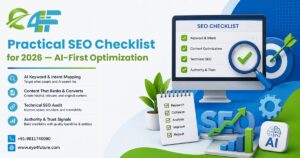
Practical SEO Checklist for 2026 — AI-First Optimization
Step 1: Audit Your Current Content for AI Overview Exposure
- Open Google Search Console and filter your performance report by query type
- Look for informational queries that are losing clicks while impressions hold steady — this is a sign of AI Overview cannibalization
- Make a list of your top 20 informational keywords and manually search each one in Google
- Note which ones now trigger an AI Overview
Step 2: Rewrite Content to Answer Questions Directly
- Identify the primary question your page is answering
- Put the direct answer in the very first sentence of the relevant section — do not make the reader scroll or search for it
- Follow the direct answer with supporting detail, examples, and data
- Make sure each section of your content makes complete sense on its own, without needing context from surrounding paragraphs
Step 3: Use Question-Based Headings (H2 and H3)
Write headings that mirror how people actually search. Examples:
- What is Google AI Overview?
- How does AI affect SEO?
- Can websites still get traffic from Google?
This improves readability and helps Google understand what each section is about.
Step 4: Add a Comprehensive FAQ Section
- Research real questions your audience asks using tools like AlsoAsked, AnswerThePublic, and Google’s “People Also Ask” sections
- Answer each question in a self-contained paragraph
- Lead every answer with the direct response first
- Implement FAQ Schema markup so Google can easily identify the question-answer pairs
- Cover both basic and advanced questions — AI Overviews pull from different depth levels depending on query complexity
- Group related questions in logical clusters
Step 5: Add Bullet Points and Lists
AI systems scan content rather than reading it the way a human does. Make it easy:
- Use bullet points for key information
- Keep paragraphs short — one idea each
- Use tables where comparisons help
- Add FAQ sections at the bottom
- Break complex processes into numbered steps
Step 6: Improve Content Depth
Short, generic blogs are struggling across the board in 2026. High-performing content includes:
- Real examples
- Current data
- Comparisons between approaches
- Practical, user-focused advice
- Comprehensive explanations rather than surface-level overviews
Step 7: Focus on Semantic SEO
Instead of repeating the same keyword throughout, cover the topic naturally and thoroughly. Alongside SEO services, include related concepts like:
- Content optimisation
- Technical SEO
- Search rankings
- Organic traffic growth
- Google algorithm updates
- AI search optimisation
Google rewards content that covers a subject comprehensively, not content that just repeats a phrase.
Step 8: Add Original Data and Research
- Conduct your own surveys, analyze your own data, or compile industry statistics from credible sources
- Original data is one of the strongest signals for AI citation
- Cite your sources clearly and link to them — this builds the kind of credibility the AI system is looking for
Step 9: Build Topical Authority
- Do not just write one blog post on a topic — build a complete content cluster
- Create a pillar page for each major topic and link to supporting articles
- Cover the topic from multiple angles: beginner guide, advanced tactics, comparisons, case studies, FAQs
- Consistent, in-depth coverage of a topic signals to Google that your website is a trusted authority
Step 10: Strengthen Your E-E-A-T Signals
- Add author bios with real credentials and experience
- Include a clear “About” page that establishes your expertise
- Get your brand mentioned on other authoritative websites
- Show real-world experience: case studies, results, testimonials, and original examples
New SEO Terms You Need to Know: GEO, AEO, LLMO, SGE
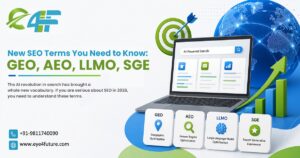
The AI revolution in search has brought a whole new vocabulary. If you are serious about SEO in 2026, you need to understand these terms.
SGE — Search Generative Experience
This was Google’s original name for the AI-powered search experience during its experimental phase. It has now evolved into what we call Google AI Overviews. When people reference SGE, they are talking about the same underlying concept.
AEO — Answer Engine Optimization
AEO is the practice of optimizing your content so that AI systems and search engines can extract and serve direct answers from it. The goal is to make your content the source that answers a user’s specific question. It focuses on writing in a way that answers questions clearly, concisely, and in a self-contained format.
GEO — Generative Engine Optimization
GEO takes AEO further. It is the practice of optimizing your content so that Large Language Models (LLMs) like Google’s Gemini, ChatGPT, and Perplexity cite your website as a trusted source in their generated responses. GEO focuses on:
- Building topical authority
- Structuring content in an AI-parseable format
- Earning brand mentions across the web
- Producing original research and data
GEO is now considered the next layer on top of traditional SEO. A website that fails at basic SEO will also fail at GEO.
LLMO — Large Language Model Optimization
LLMO is the technical side of making your website visible and accessible to AI crawlers and language models. It includes things like making sure AI bots can crawl your website, your content is not hidden behind JavaScript or paywalls, and your site structure is clean and logical.
LLMs.txt
You may have heard about llms.txt — a file some websites add to help AI systems understand their site structure. However, Google has officially clarified that you do not need an llms.txt file to appear in Google’s AI Overviews. Clean HTML, proper schema markup, and good content quality are what matter for Google Search specifically. That said, llms.txt can be useful for other AI platforms like ChatGPT or Perplexity.
E-E-A-T
Experience, Expertise, Authoritativeness, and Trustworthiness — Google’s core framework for evaluating content quality. In the AI era, E-E-A-T signals have become even more important. Content written by named authors with demonstrable expertise is far more likely to be cited in AI Overviews.
Tools and Resources Worth Using Right Now
Several platforms have updated specifically to track AI Overview impact:
- Google Search Console — the most important source for how your content is actually performing
- Ahrefs and SEMrush — now track AI Overview presence for specific keywords
- SEOClarity — publishes detailed CTR impact studies for AI-enabled SERPs
- Google Search Central — the most reliable source for understanding what Google expects from content in 2026
Staying on top of these is no longer optional for anyone running a serious SEO strategy.
Technical SEO for the AI Era
Technical SEO remains the foundation. If your technical setup is broken, no amount of content strategy will save you.
Critical technical checks for 2026:
- AI crawler access: Make sure AI crawlers (like Googlebot, GPTBot, and others) are not accidentally blocked in your robots.txt file
- Server-side rendering: Ensure your important content is server-side rendered, not hidden behind JavaScript that bots cannot parse
- No content gating: Content locked behind logins or paywalls will not be indexed or cited
- Page speed: Slow pages are penalized by Google. Use Core Web Vitals as your benchmark
- Schema markup: Implement structured data for FAQs, articles, reviews, and products. This helps Google understand your content structure instantly
- Mobile optimization: With mobile users 40% more likely to engage with AI Overviews, your mobile experience must be flawless
- Clean heading hierarchy: Use H1, H2, H3 in a logical, consistent structure with one topic per section
A note on llms.txt for Google: Google has officially stated that you do not need to create an llms.txt file to appear in Google AI Overviews. Focus on clean HTML, proper schema, and quality content for Google Search. If you want visibility on ChatGPT or Perplexity, an llms.txt can help there.
How Businesses Can Adapt to AI Search
The businesses doing well in AI-powered search right now are not chasing algorithm tricks. They are focusing on becoming genuinely useful to their audience.
That means:
- Publishing helpful content consistently
- Solving real problems for real customers
- Building recognisable brand authority in their niche
- Improving the on-site experience for users
- Creating content that puts people first
The goal is not just to rank anymore. The goal is to become the best answer available for the questions your audience is asking.
Biggest SEO Mistakes to Avoid in 2026
Publishing AI-generated content without editing it Google can identify low-quality, unedited AI output. Always review, improve, and humanise any AI-assisted content before publishing.
Keyword stuffing: Writing unnaturally to repeat keywords harms readability and no longer helps rankings. Write for people, not search engines.
Ignoring search intent: Content that does not actually match what the user is looking for will not perform, regardless of how well-optimised it is technically.
Creating thin content Short, generic posts rarely rank well in 2026. Depth and usefulness matter.
Not updating old content Fresh, accurate content performs better. Old posts with outdated information lose credibility over time.
Grow Your Business with Eye4Future
Want your website to perform better in Google’s AI-powered search results?
Eye4Future helps businesses grow their online presence through:
- SEO services built around how search works in 2026
- Digital marketing strategies that drive real results
- Content marketing focused on genuine user value
- Website optimisation for both users and search engines
- Organic traffic growth through sustainable, long-term strategies
- AI-focused SEO solutions for the modern search landscape
Our SEO team works on creating user-first strategies that keep businesses visible as search continues to evolve. If your website rankings have dropped or your traffic has been inconsistent, we can help you build a smarter SEO strategy that works in 2026 and beyond.
Want to know how AI-ready your website is? Get in touch with the best digital marketing agency in Chandigarh for an SEO audit built around where search is heading.
Frequently Asked Questions
What Are Google AI Overviews And How Do They Work?
What Is The Difference Between SEO, GEO, And AEO?
Why Is My Website Traffic Dropping Even Though My Rankings Have Not Changed?
How Do I Get My Content Featured Inside Google AI Overviews?
Does Zero-Click Search Mean SEO Is No Longer Worth Doing Anymore?
Which Types Of Queries Are Most Affected By AI Overviews?
What Is SGE And How Does It Relate To AI Overviews?
How Can I Check If My Website Is Being Cited In Google AI Overviews?
Is Traditional SEO Still Important In 2026?
How Quickly Can Businesses Adapt Their SEO Strategy For AI Overviews?

Eye4Future
Since 2014, Eye4Future has been delivering innovative digital marketing and web development solutions to help businesses grow online. Our expert team creates tailored strategies that drive success and boost visibility.





 Company Profile
 Why Choose Us
 Clients Testimonial
 Mission, Vision & Goals
 Frequently Asked Questions
 Designing
 Development
 E-commerce
 Digital Marketing
 Reputation Management